
In which we narrowly escape from the restricted section, reacquaint ourselves with tunnels, and ascend the mighty Foxton Locks.
There IS a canal in the photo above, believe it or not. We made it through the wilderness, yes, we made it through… but as it’s taken us until this very day to actually get to the Grand Union Main Line, there will yet be a Part 3 forthcoming…
Astute readers will have noticed, in my last instalment, a reference to restricted hours between Lock 38 – 31, and may have been puzzled that although we had reached Lock 30, this post continues the saga. What I failed to mention was the specifics of the crisis that prompted our flotilla to head off apace from Aylesbury – the drought restriction had been extended from Lock 38 all the way to Lock 18 – a significant portion of canal – and not only were immediate time restrictions in place, the entire section was to be completely closed for navigation in just under one week’s time.
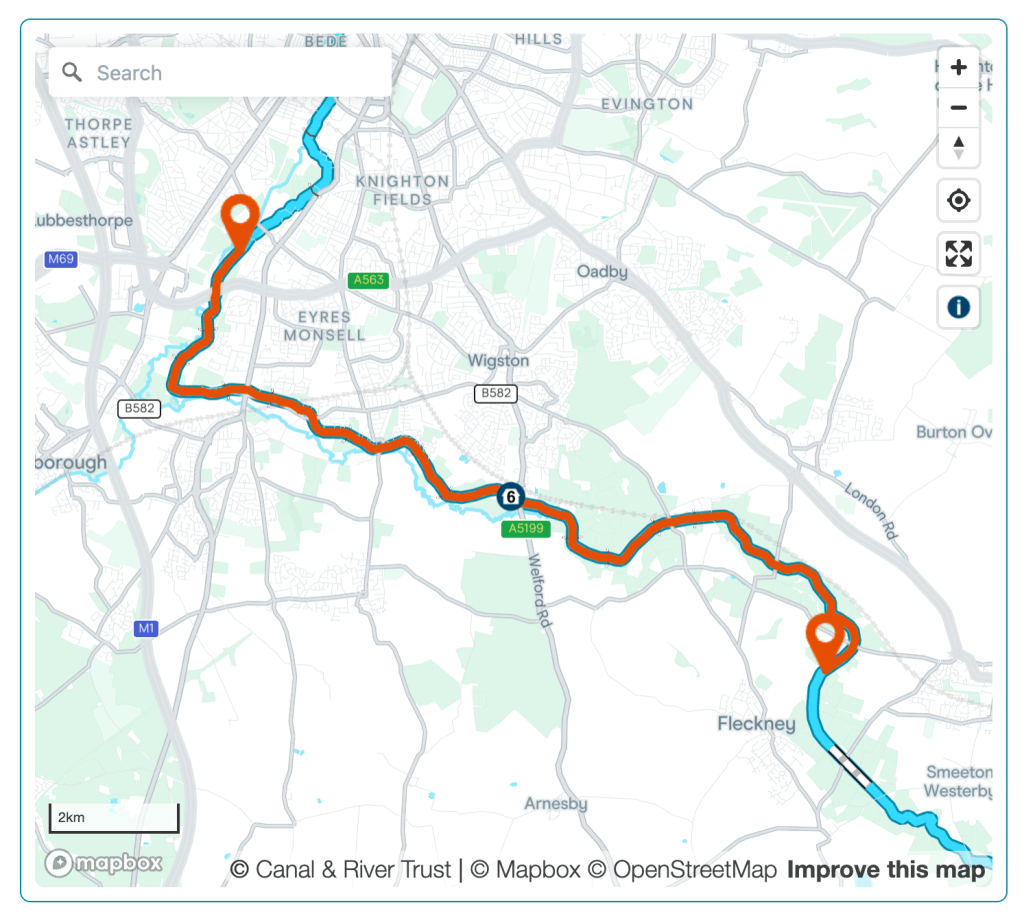
This is what prompted us to hustle on, although we would gladly have stayed longer at Kilby Bridge (the little blue box in the middle above). We plotted our path, sketched out a tentative overnight stop after seven of the twelve locks remaining, allowing us to get clear with a couple days to spare. As we were hauling ropes in, we were pleased to see another boater doing the pre-departure water top up; a quick confab and we were lock mates for the day. Even better, a couple of boats had just come down the next lock heading north, so the first four locks (two lots of close-beside pairs) needed little prep.1 A real blessing, considering the shallowness of the pounds required very careful steering. There were more groundings, but we inched on through together, making surprisingly good time through the last triplet of locks. Our lock mate decided to moor up as soon as possible after Lock 23, but as the available spots were right beside the railway line, we optimistically pushed on to where we thought there might be another space closer to the next locks.
You would think we would have learned by now to take a good thing when it is right in front of you. And you would be wrong. Where our morning’s seven locks had only taken us about three hours, it took us another agonising two before we managed to scrape through the worst low water we had seen, remove ourselves from multiple groundings, and scramble through just one more lock.
Every few hundred metres our hopes would rise at the sight of neat armco, and every time we approached it to moor, we would ground ourselves before we could get close enough to safely tie up. After several repetitions of this angst (accompanied by a great deal of very rude words weeping and gnashing of teeth), we gave up and decided to moor as close as possible to the next Lock, 21, even if we ended up on part of the lock landing. Normally this is a grievous sin, but in the circumstances we had little choice. Besides, we planned to head off early to get off the dratted section…
…until we checked email in the late afternoon to find that due to the worsening situation, Locks 18 and 38 would be physically chained up for the weekend to let the water recover2, and navigation would then only be available for a few hours on Monday and Tuesday until the closure took effect. So there we were, in the middle of nowhere (about 30 minutes walk to the closest village,) with nowhere nearby to safely park Nelson. After some brainstorming, we decided to have a quiet weekend in the country, leave him at Kilby, and take shanks pony when necessary.
In fact it was a lovely weekend, though quite hot. We walked into the charming Kibworth Harcroft to an excellent late lunch at Dodies Cafe, and picked up a few useful finds at the op shop (husband finally has a decanter that pleases him). Some essentials from the Co-op and a quick Uber back (as it was rather warm, did I mention?) left us with plenty of time to snooze. You’d think I would have got some of this written then, right? I am nothing if not a world-class procrastinator. Besides, it was hot…
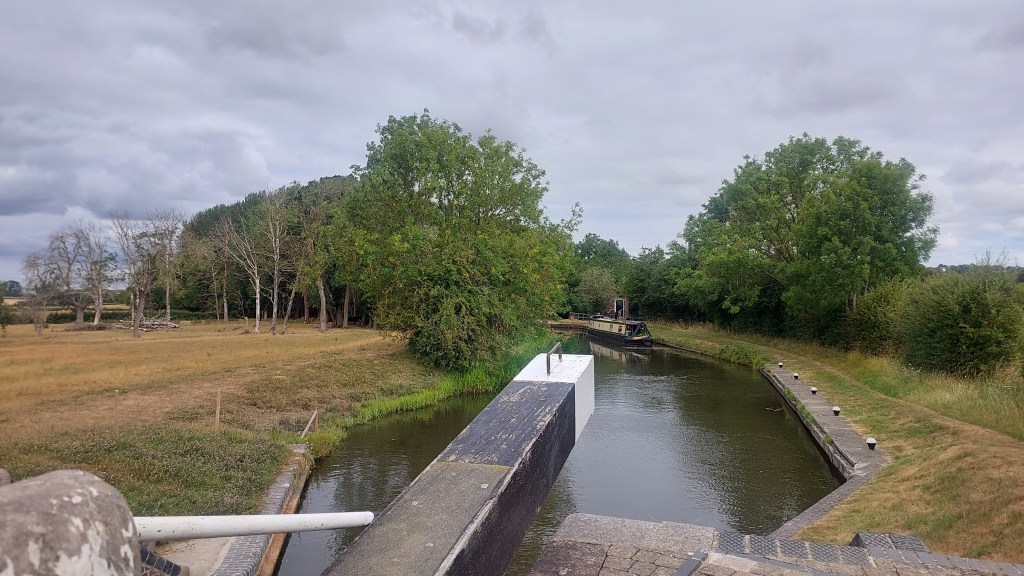
Monday came, and we went, as early as we could make ourselves. I elected to lock, feeling that my knee was ready for it. Despite one lock with stubborn ground paddles, the remaining four were mostly ready for us and easy to negotiate. At last, something going to plan! We cracked on remarkably fast and at long, long last, we were out of that dratted low water and onto five gloriously lock-free miles ahead of the summit pound, reached by navigating the iconic Foxton Locks.
Before Foxton, however, there was a tunnel. We’d not met one for a while, so there was mild anxiety about ensuring clear passage. We were pleased to find that a) it was sufficiently short and straight to see well through to the other end, and b) it was double width anyway, so theoretically two narrowboats could pass while traversing.3
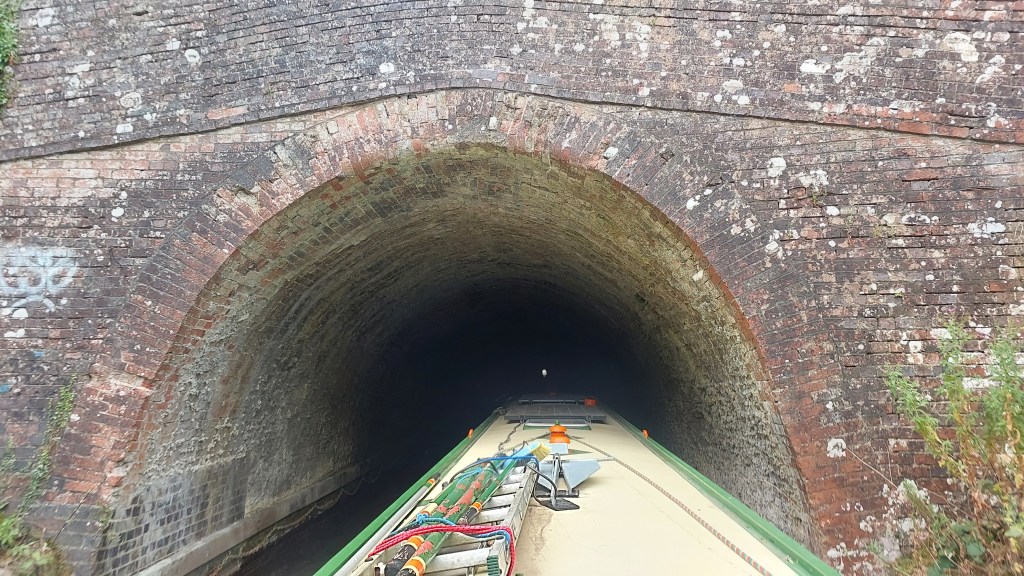
Through Saddington Tunnel, a short stop at Debdale Wharf for fuel top-up, and we were on the cusp of one of the Waterway Wonders. Foxton Locks, as I mentioned in an earlier post, is unique among lock structures – an elegant double staircase, ten locks in two sets of five. Lock combinations can range from singles, close-by pairs or collections, or larger groups. When more than two or three are in close proximity, they are usually called a flight. The longest flights are Tardebigge (30 locks) and Caen Hill (29);4 most long flights have CRT volunteers (‘volley lockies’) to direct and assist (and prevent water wastage). Staircase locks are a specific and complex flight arrangement where each lock chamber opens directly into the next, usually being filled by side pounds which can keep reusing the same water as boats rise and fall. Not all flights are staircases, or contain staircases, though short stair stacks are sprinkled around.
We moored up shortly before the Foxton basin in the afternoon, so we could check in with the volleys and join the queue first thing in the morning. It takes at least 45 minutes to go through, and we were aware of many other boaters who, like, us, had been desperate to get up to the 20 mile summit pound and have a decent break from lock-induced groundings. While the dreaded closures were slowly taking hold, Foxton Locks, and Watford Locks just before the end of the Leicester Line, were being maintained on a time restricted basis. 10 am saw us arriving in the basin and joining the line to ascend.
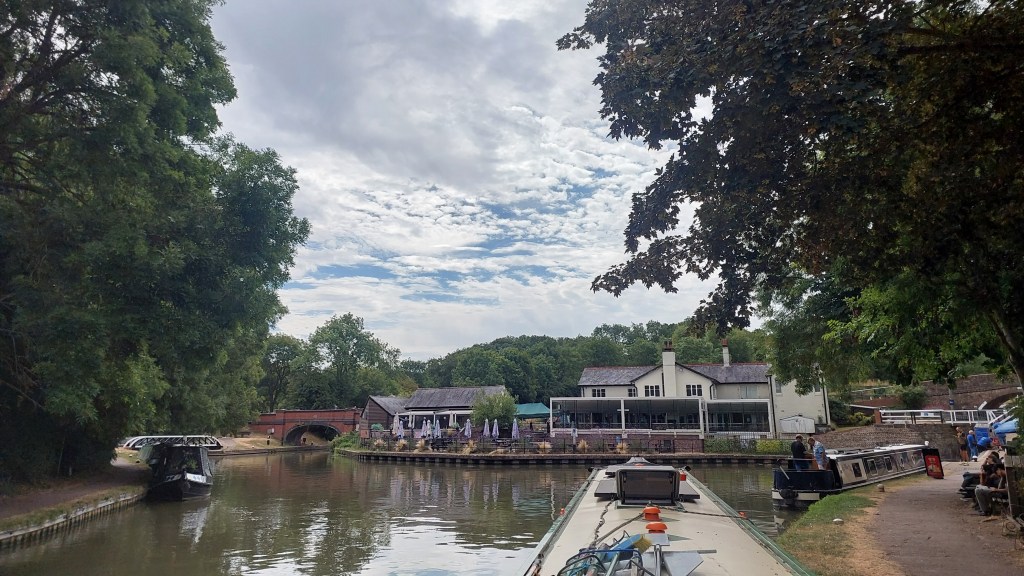
Just time for a quick coffee while we waited and then it was our turn. I steered Flow carefully into the chamber, Shelden joined the volleys on the paddles and off we went. It was, in fact, amazingly easy: as a significant navigation hub, the mechanisms are well-maintained and there was a generous supply of volley lockies all the way up. As it’s currently school holidays, there was also a proliferation of gongoozlers of all ages. Between stepping Flow up each lockstep, I was kept busy answering random questions about narrowboat life. One kindly offered to take a photo for me! If you look closely, you can see husband preparing to work the next lock too.
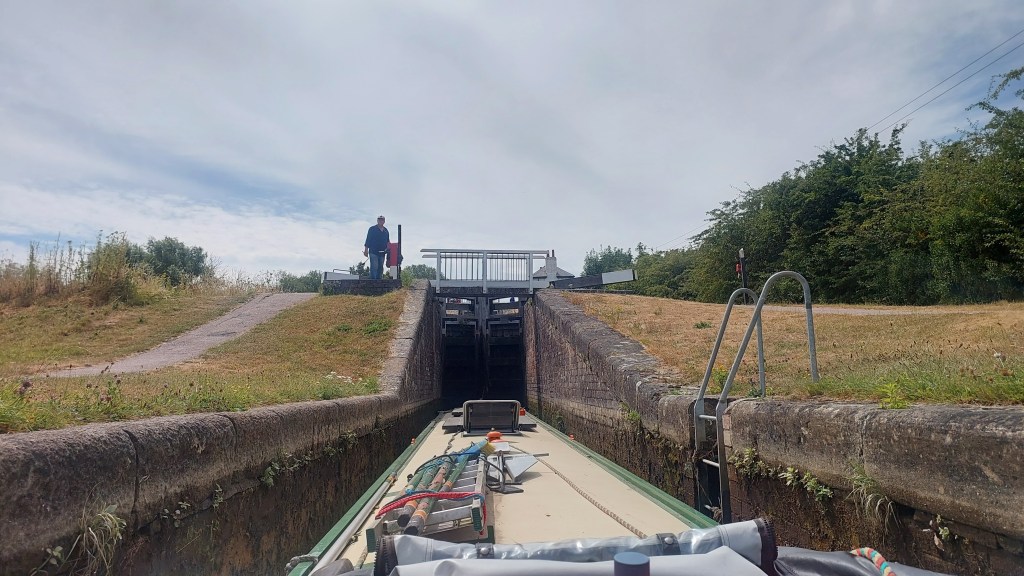
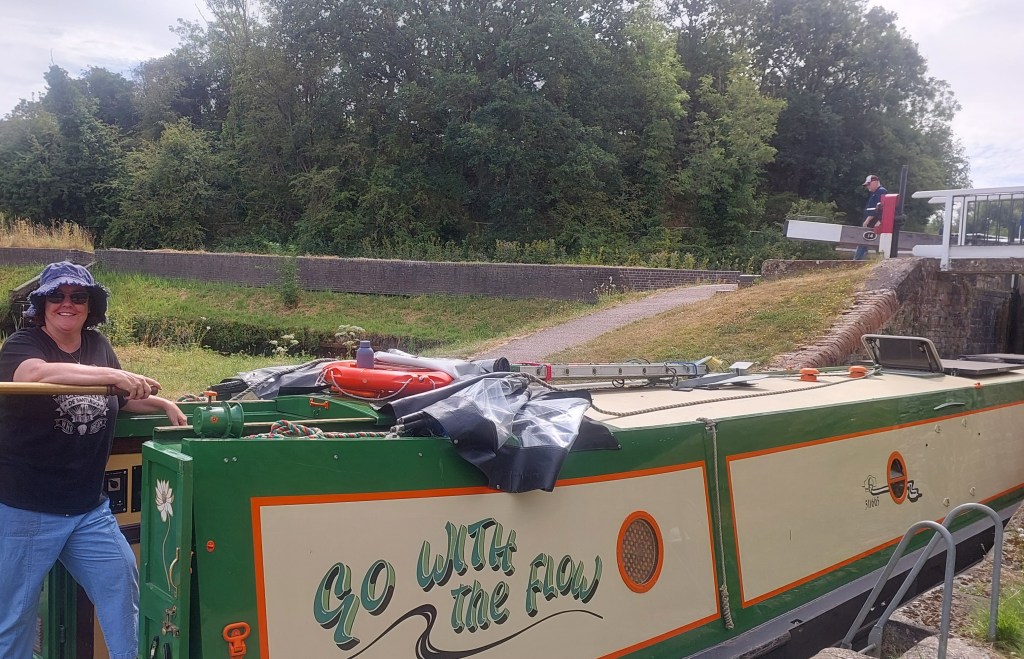
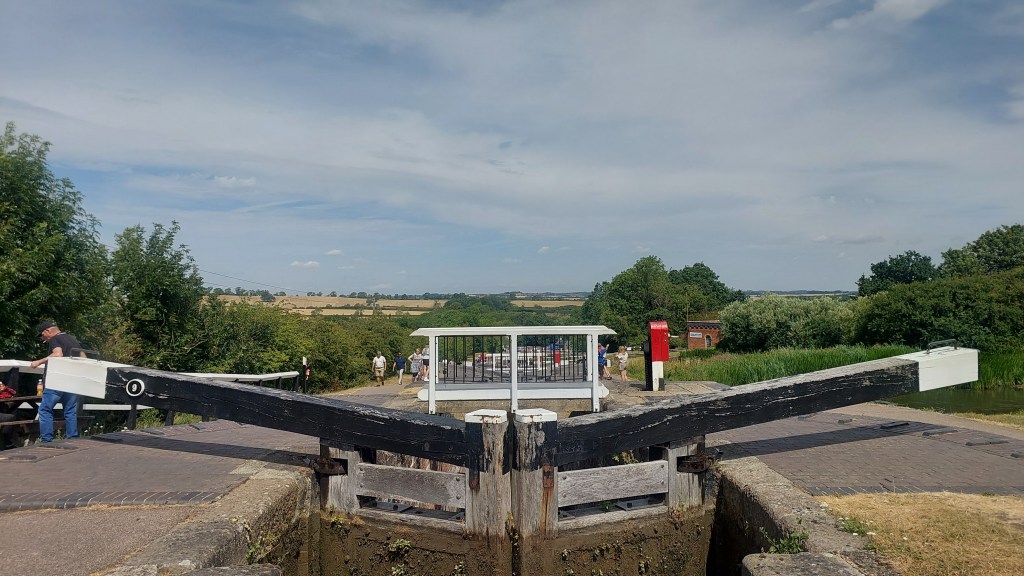
Even though we were well through the locks by lunch time, we decided to quickly fill up at the water point and moor just beyond at the 2 day visitor moorings. It was a lovely location for a short stop, which also allowed us, after a rather long Uber, to finally reunite ourselves with Nelson.
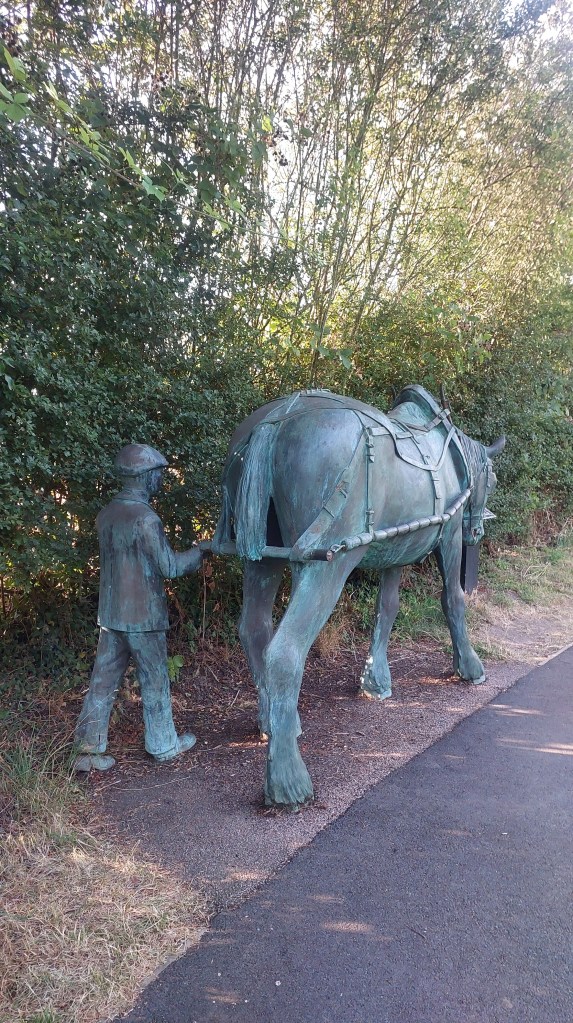
We weren’t off the Leicester Line yet… but at least we had no more locks for miles, until the last flight-cum-staircase, Watford Locks. Then we would have to make a decision to turn left, toward London, or right, toward Oxford. Further closures on the South Oxford canal had put paid to my plans to cruise all the way to Oxford for Oxonmoot, in September, but we hadn’t ruled out travelling in that direction to get closer – and possibly start thinking about a winter mooring (ridiculous as that sounds in the current heatwave). In the meantime, we checked CRT updates with fanatical devotion and enjoyed the momentary locations – and prayed fervently for rain, along with pretty much everyone else in the UK…it is so, so dry, it’s heartbreaking.
to be continued…again…
- Over the next few days there were an increasing number of stressed boaters trying to get either up to Lock 18 and the summit pounds (heading south), or down to Lock 38 and the relative freedom of the River Soar (heading north)… yes, it does seem the wrong way round. I thought it was just because we’re from the land down under 🙂 ↩︎
- There were a few desperate emergencies where CRT personally escorted boaters out either end, but unless you had a serious deadline to return a hire boat, catch a plane, etc, it was no passage. ↩︎
- I really, really, wouldn’t want to, though. It would be a very tight fit. Widebeams must book passage through several of the GU tunnels, so that everyone is forewarned to stay clear… ↩︎
- Check out CRT’s page if you are keen on interesting canal network facts! ↩︎

